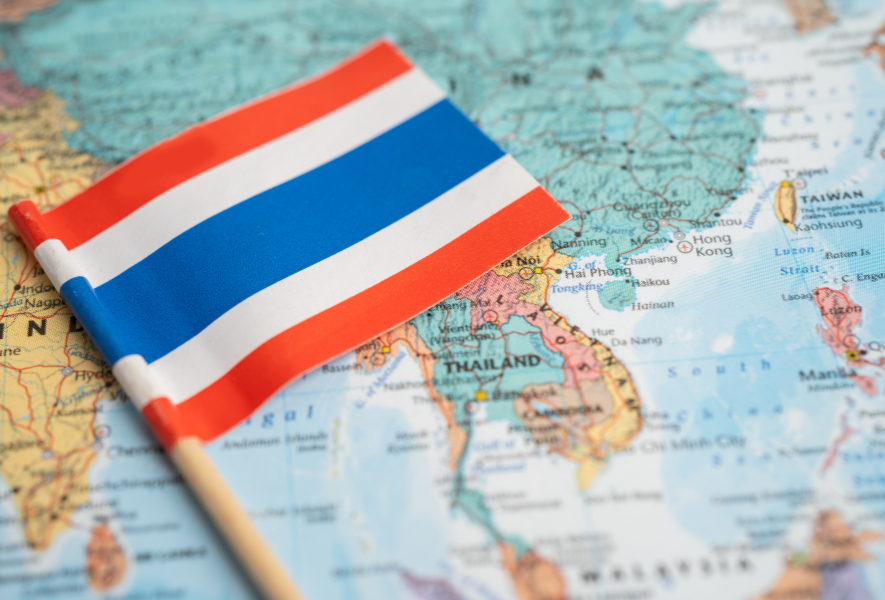
At the SBC Summit in Lisbon, discussions about the development of casino regulation in Thailand sounded very different from a year ago.
The political crisis led to the bill being withdrawn in July after a leaked phone call between Paetongtarn Shinawatra and former Cambodian leader Hun Sen amid rising tensions on the border between the two countries.
Following the leak, Shinawatra was suspended from office as protesters demanded her resignation. The Bhumjaithai Party withdrew from her coalition government, drastically reducing her parliamentary majority. Soon after, she was removed from her post by a ruling of the Constitutional Court.
Opening the Asia track, Lau Kok Keng, Head of Intellectual Property, Sports & Gaming at Rajah & Tan Singapore, lamented the collapse of the bill and the political machinations that led to it.
Kok Keng, who played a key role in establishing Singapore’s regulatory framework – widely regarded as the gold standard in Asia – stressed that it is essential to take Thai culture and history into account to fully understand why the initiative failed. He questioned whether the downfall was driven by resistance to anything connected with the Shinawatra family, and whether opposition to the bill was simply a form of protest against her policies.
Newly appointed Prime Minister, Anutin Charnvirakul, recently dismissed the chances of gambling legislation being put back on the table, telling local media: “If someone says gambling can stimulate the economy, I’d say wait for another prime minister.
“Don’t wait for me, as I don’t agree with this approach. While I was the interior minister, I also said poker shouldn’t be allowed. But once I left, they went ahead with it. We must bring righteousness and justice back to our nation.”
Nevertheless, Kok Keng noted that such a stance has faced criticism, given that Charnvirakul himself was one of the leading advocates for the legalization of marijuana in Thailand. Moreover, despite political instability, Kok Keng believes that the potential economic impact of five casinos is too significant to ignore.
He struck a note of optimism, stating that while today proposals to establish casinos in Thailand appear dead, “the story may not be finished.”
During the bill’s suspension, the prospect of legalizing online gambling was actively discussed. However, Kok Keng warned that such an initiative would face even fiercer opposition than the land-based casino bill.
In an interview with iGaming Expert, he emphasized that the situation in Thailand is a textbook example of how political instability, public opposition, and insufficient groundwork can derail even the most well-conceived legislative initiatives.
A key factor behind the lack of public consensus was the controversial decision to effectively exclude local residents from entering casinos.
According to Kok Keng, Thailand’s experience offers important lessons for emerging markets:
- Public Engagement is Essential. Early, transparent, and regular consultations with the population are critical for legitimacy and alleviating public concerns. This also helps counter opposition parties that seek to exploit fears about the social and moral risks of casino legalization, framing government initiatives as a disregard for democracy and an inability to handle divisive issues effectively.
- Regulatory Clarity and Credibility. A clear, stable, and authoritative regulatory framework must be in place before moving forward with reforms.
- Political Stability. Contentious reforms are only possible with a stable government holding a clear mandate. The opposition must put national interests above personal ones and support initiatives that benefit the country.
- Social Safeguards. A convincing plan to manage social risks (problem gambling, crime, money laundering) is non-negotiable. It must be central to any steps toward legalizing casinos.
- Commitment to a Long-Term Strategy. Lawmakers must demonstrate to investors and the public that they are committed to consistently implementing responsible gambling policies and that such initiatives will not be subject to sudden reversals, political interference, or disruptions from military coups.
Don’t forget to subscribe to our Telegram channel!