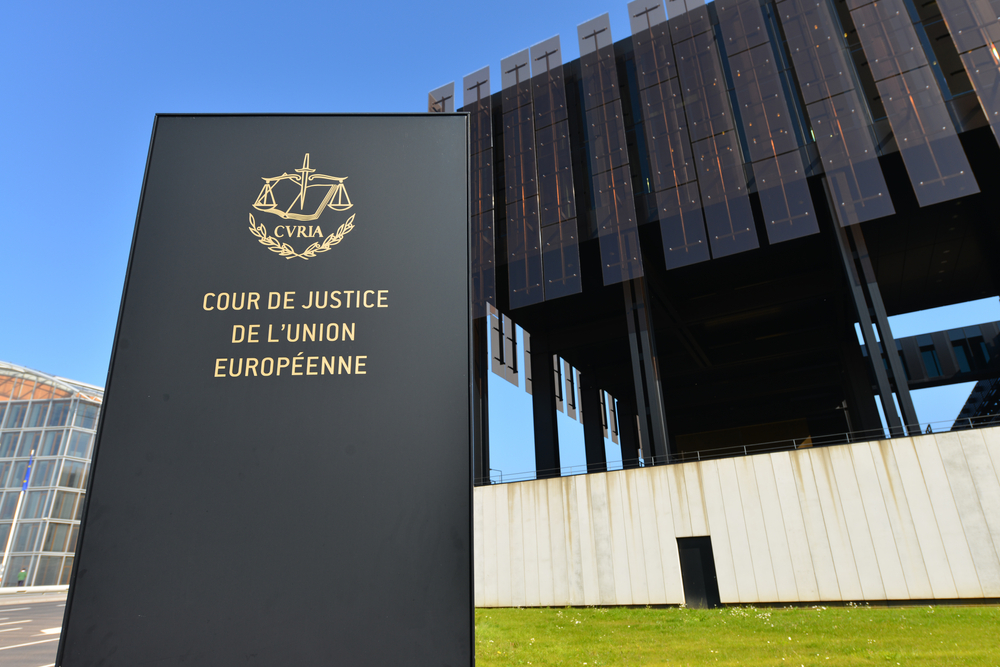
The latest preliminary ruling from the European Court of Justice (CJEU) has continued to accelerate momentum against the application of Article 56A – the legal order used by Malta courts to deny the accountability of foreign rulings on domiciled iGaming businesses.
The CJEU has issued its judgment on a dispute related to the Malta-licensed Mr Green in 2021, which was ordered by Austrian courts to refund a domestic customer their losses – an order that the gambling brand refused to comply with.
Exhausting domestic procedures, in 2024, the claimant requested that Austrian courts review the use of a European Account Preservation Order (EAPO) on Mr Green’s funds in Ireland, Luxembourg and Sweden. It cited ‘a legal mechanism that allows creditors to freeze a debtor’s bank funds across different EU member states using a single application’.
The CJEU has now ruled that the Austrian court can take into account the presence of Article 56A – a protection formerly known as Bill 55 and enforced since 2023 to stop/limit foreign accountability on Malta-licensed operators when making a decision.
The judgment also ruled that the Austrian courts can take into account the previous actions of the debtor, in this case, Mr Green’s decision to sever ties with its Austrian payment service provider following the ruling in 2021.
The decision further solidifies the CJEU’s opinion that Article 56A cannot be invoked by Malta to shield its licensees from action by courts across the EU.
There are currently several cases involving players from Austria and Germany seeking to reclaim funds they spent on Maltese-licensed gaming platforms under their respective national laws.
CJEU proceedings concerning Malta’s application of Article 56A have increasingly moved against the jurisdiction’s position, as Malta has been denied by judgments related to the player disputes of Wunner Case (Austria).
In cases where Article 56A has been invoked by Malta’s courts, the CJEU has ruled that national laws where the players were residing at the time of spending override the Maltese legislation.
This sentiment, coupled with the CJEU’s determination that Bill 55 can be considered when considering the use of EAPOs to target Malta-based companies, further threatens the protections Malta’s rules provide its licensees.
Don’t forget to subscribe to our Telegram channel!