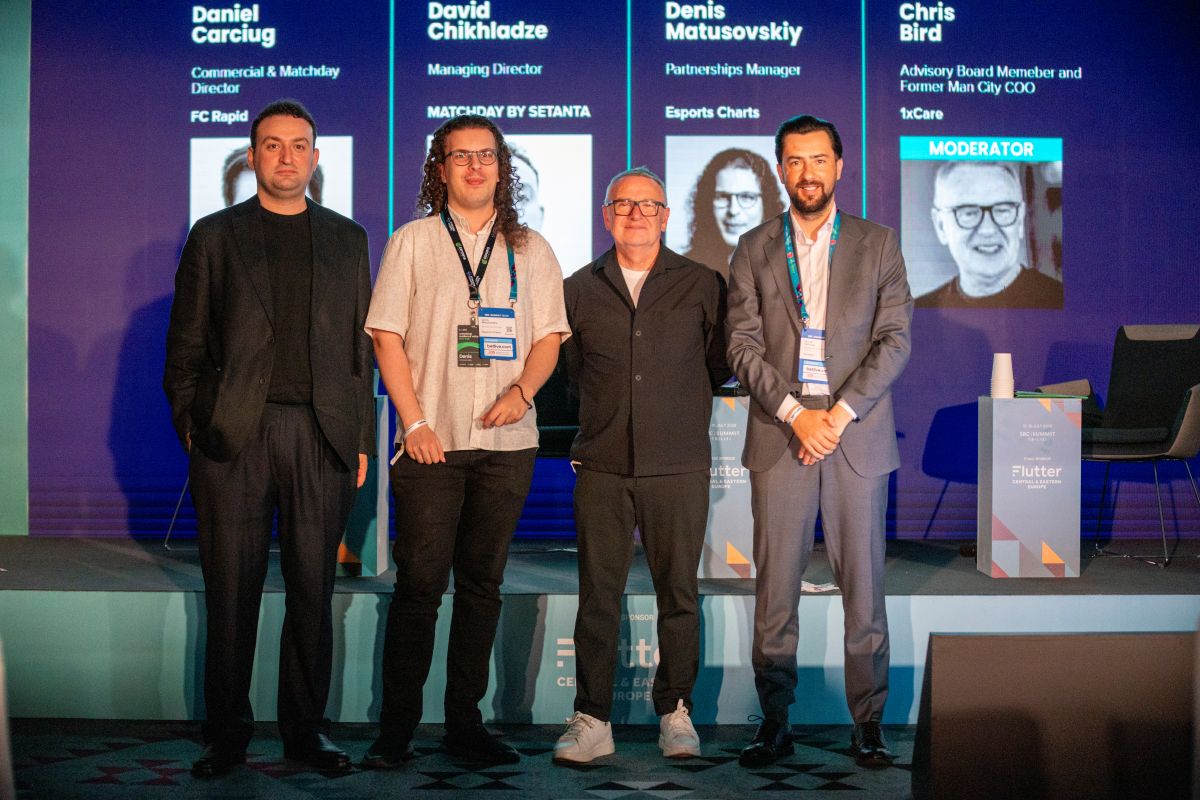
At SBC Summit Tbilisi 2026, the panel “From Clubs to Entertainment Brands: The New Business Model of Modern Sports” explored how football clubs, broadcasters, and digital platforms are adapting to a world where sport is no longer only about the 90 minutes on the pitch.
Moderated by Chris Bird, 1xCare Advisory Committee Member and former FC Manchester City COO, the discussion featured Daniel Carciug, Commercial & Matchday Director at FC Rapid, David Chikhladze, Managing Director of MATCHDAY BY SETANTA, and Denis Matusovskiy, Partnerships Manager at Esports Charts.
Opening the session, Bird reflected on how dramatically the sports business has changed over the past three decades. In the past, football clubs relied mainly on tickets, shirts, sponsorships, and television rights. Today, the model is far broader.
“Sport is no longer competing with other sports. It’s competing for attention against Netflix, TikTok, gaming, YouTube, podcasts – every notification on our phones,” said Chris Bird.
A key theme of the discussion was that clubs are no longer simply sports organizations. They are becoming media companies, travel providers, content studios, and lifestyle brands. Fans do not only want to watch the match; they want to experience the club before, during, and after the game.
David Chikhladze explained that this shift is at the heart of MATCHDAY BY SETANTA, which connects broadcasting with real-life experiences such as tickets, travel packages, and matchday products.
“People not only want to watch, but they want to feel, they want to experience,” said Chikhladze. “Broadcasting is becoming less about television and more about lifestyle.”
For clubs, this creates new commercial opportunities, but also new responsibilities. Daniel Carciug emphasized that monetization must feel natural and must be connected to the fan journey. At FC Rapid, for example, commercial offers were placed around key moments of the matchday experience – food and drinks when fans entered the stadium, merchandise around player warm-ups, and other products at moments when fans were most engaged.
“You have to put the right commercial revenue stream at the right moment,” said Carciug. “Think about what you have to sell and what kind of needs the fans have in order to serve it in a very organic way.”
The panel also discussed how younger audiences are discovering sport through new formats such as the Kings League and Baller League, as well as through influencers, creators, short-form content, watch-alongs, and social media platforms. Denis Matusovskiy noted that sport increasingly needs to go where audiences already spend their time.
He pointed to online-first viewing habits, YouTube broadcasts, watch-alongs, and alternative visualizations as proof that sports content is becoming more flexible and platform-driven.
“Sports is coming to where people already are,” said Matusovskiy.
However, the speakers also acknowledged the risks of over-commercialization. While entertainment can help clubs reach new audiences, it must not come at the expense of authenticity. Carciug warned that if a club fails to communicate its identity clearly, commercial activity can be misunderstood by fans.
Bird added that successful clubs are those that embrace entertainment without losing sight of their roots.
“The rules of sport haven’t changed,” Bird concluded. “The next generation won’t fall in love with sport because it’s on television. They’ll fall in love with it because someone they trust shared a moment with them.”
The future of sports belongs to organizations that can create meaningful moments, tell strong stories, and build experiences around the game – while still protecting the authenticity that made fans care in the first place.
Don’t forget to subscribe to our Telegram channel!