
Producing new creative work for Slot City no longer means launching the entire production cycle each time. Generative AI makes it possible to test ideas faster, change individual frames, and produce more content. But the biggest change for the team has been how its work with the brand’s visual world is now organized.
AI has quickly gone from a bold experiment to a routine working tool for marketing teams. Research confirms this: according to Gartner, among organizations that have adopted GenAI, 77% use it to produce creative work, and Canva’s latest 2026 report finds that 97% of marketing leaders work with AI daily. The difference lies in how deeply a company is willing to embed the technology — and what it does with the resources it frees up.
For Slot City, the first reason for a full transition was flexibility. Making a video used to be a heavy production machine: creative development, pre-production, production, and post-production took six to eight weeks from idea to result. Now the same journey fits into roughly two weeks. The greatest value comes from working with individual frames. Changing one detail in a finished video once meant restarting the whole process, with reshoots and a fresh budget of time and money. Today the team generates a new frame and drops it into place within a few hours. By rough estimates, creative output has grown fivefold.

“AI has significantly reduced the technical side of the work, but not the creative one. On the contrary, the team now has more time to find ideas, set art direction, and develop the visual style. We can test ideas faster, refine visuals, and pay more attention to how the brand’s style takes shape. Our job is to make sure the content stays recognizable and consistent, regardless of how exactly it is created,” says Hanna Chumachenko, brand communications expert at Slot City.
For Slot City, using AI also proved a very logical and natural approach because most of the brand’s content is built around fictional worlds, characters, and mascots. Each game has its own visual story, and together they form a large system of the brand’s worlds. Generative AI fits organically into the creative process here because it makes it possible to create new visual environments around a specific idea.
But using AI alone doesn’t make the content recognizable. The technology helps create new visuals quickly. Keeping them part of a unified style is the team’s responsibility. AI can produce a quality frame in minutes, but without a clear concept, it will remain just another image generated by a neural network.
What matters most is what the team adds on top of the technology: the brand’s personality, visual rules, characters, details, and the consistency that ties different content together into one world. That’s the work of the creative teams.
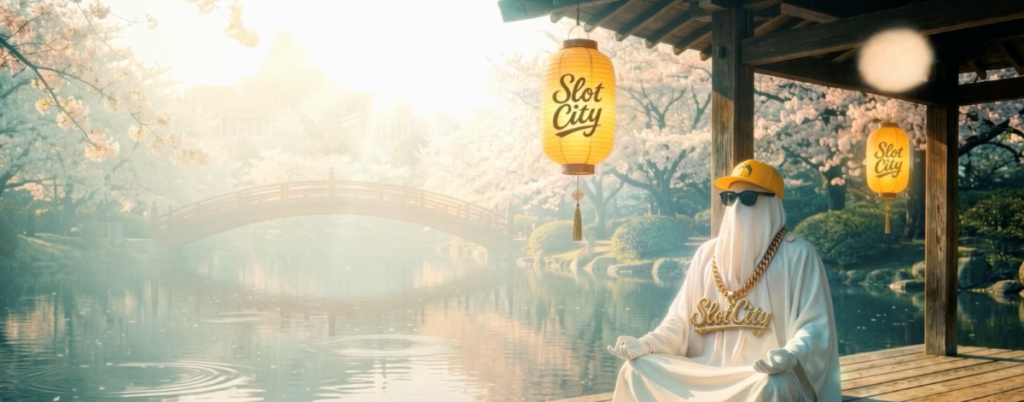
With AI in place, the team spends less time on technical production and more on developing concepts, quality control, and shaping a recognizable brand style. In other words, the technology gives it more room to work with brand identity.
“For us, AI is first and foremost not about savings, although costs really have dropped several times over. The biggest change has been in speed and how much control we have over the process. Today we can test ideas quickly, adapt our creative work to a specific task, and not lose weeks to restarting production. This gives the team much more freedom — and at the same time, better control over the result,” notes Artem Rudychenko, CEO of Slot City.
AI is making quality visuals accessible to more and more brands. So the question is no longer who can generate an image faster. Far more interesting is who can build their own recognizable world around the technology. Today, this is becoming the new area of work for creative teams.
Don’t forget to subscribe to our Telegram channel!