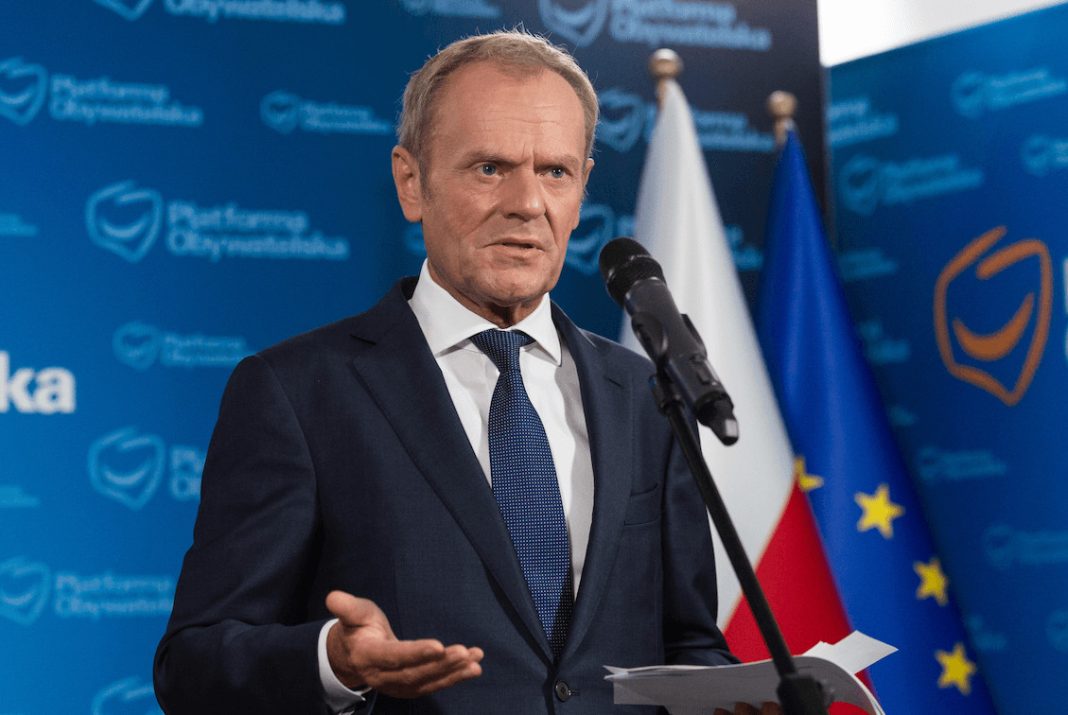
Two months before a decision is due on the EU’s next multiannual budget, Polish Prime Minister Donald Tusk called on EU member states to consider introducing a common gambling levy. He described the initiative as a “serious economic proposal.”
Tusk, who served as President of the European Council from 2014 to 2019, has become one of the most prominent supporters of financing the EU budget for 2028–2034 through new “own resources.” Such an approach would reduce the budget’s reliance on direct financial contributions from member states.
Following a meeting of the Visegrád Group leaders in Bratislava, Tusk said that the EU would need more funding as its responsibilities expand. At the same time, he argued that increased funding should not create an additional burden for citizens and workers.
“The European Union needs to spend more because new challenges are emerging. I would like the increase in resources not to create an additional burden for people,” the Polish prime minister said.
Tusk also called on European leaders to carefully consider proposals for EU-wide taxes on major digital platforms, crypto assets and online gambling. He argued that industries and companies with greater financial capacity should make a larger contribution towards covering the EU’s new spending needs.
The Polish prime minister’s statement could influence further discussions on a gambling levy, as the initiative has now entered negotiations between EU governments. Until now, it had mainly been supported by members of the European Parliament.
The European Commission has proposed an EU budget of almost €2 trillion ($2.31 trillion) for 2028–2034. On average, it would amount to around 1.26% of the EU’s gross national income.
The new budget is expected to place greater emphasis on defence, economic competitiveness, workforce skills, migration management, digital security and climate resilience.
This allocation of funding has raised concerns among countries seeking to preserve spending on traditional priorities, including cohesion programmes, regional development and agricultural support.
Ireland holds the rotating presidency of the Council of the EU during the second half of 2026 and is expected to help member states reach a compromise. Dublin is expected to propose possible new revenue sources as governments seek to reach a political agreement by the end of the year.
At the same time, the question of how to finance the €2 trillion ($2.31 trillion) budget remains contentious. Wealthier EU countries that are net contributors are calling for spending cuts, while other governments oppose reductions in funding for agricultural and regional programmes.
Tusk’s support relates to a European Parliament proposal to use online gambling and betting as a new source of EU revenue. In March, MEPs asked the European Commission to assess the feasibility of introducing such a levy, its economic potential and its legal basis as part of preparations for the new budget cycle.
Supporters of the initiative expect a common levy to generate between €2 billion ($2.31 billion) and €4 billion ($4.62 billion) annually, and up to €28 billion ($32.31 billion) over seven years.
The funds could be directed towards education, digital skills development, youth programmes and gambling-harm prevention.
However, the gambling levy is not yet included in the European Commission’s official list of new EU revenue sources. Brussels is considering five other options: the EU Emissions Trading System, the Carbon Border Adjustment Mechanism, tobacco excise duties, electronic waste and a new corporate contribution.
The latter would apply to large companies operating in the Single Market with annual net turnover of at least €100 million ($115.4 million).
According to the European Commission’s estimates, the five sources combined could generate around €58.2 billion ($67.1 billion) in annual revenue for the EU budget.
The gambling levy remains a separate political issue. There is still no specific legislative proposal, tax rate or agreed tax base. Tusk also did not clarify how the levy should be structured.
Disagreements Over the Levy
The proposal to introduce an EU-wide tax on online gambling was put forward in the European Parliament by the Progressive Alliance of Socialists and Democrats (S&D). Romanian MEP Victor Negrescu supports the initiative and has proposed a levy of up to 2% on online gambling and betting revenues generated across EU member states.
Malta’s Prime Minister Robert Abela became the first head of government to publicly reject the proposal. He believes gambling taxation should remain within the competence of individual member states. At the same time, Malta supports the creation of new EU own resources but does not consider gambling revenue an appropriate source of funding for the EU budget.
It will also be necessary to determine whether the new levy would replace part of existing national taxes or become an additional charge for licensed operators.
The latter option could face significant opposition from the regulated sector.
European industry organisations have repeatedly warned that increasing the tax burden on licensed companies could reduce the share of the regulated market and strengthen the position of offshore operators that do not pay taxes.
As a result, a levy imposed solely on licensed companies could conflict with another EU objective — strengthening the fight against illegal gambling websites and improving consumer protection across the Single Market.
Towards Harmonisation
In a recent SBC News article, European legal expert Claire Pinson-Bessonnet outlined the main challenges the EU could face in introducing a unified tax on gambling revenues.
The EU is gradually developing common rules for sectors such as payments, online banking and insurance. Gambling, however, continues to be regulated primarily at the national level and is not subject to unified requirements or coordinated enforcement mechanisms.
According to Pinson-Bessonnet, an EU-wide gambling levy could become a first step towards more harmonised regulation of the European gambling market, despite differences between national laws.
Tusk’s support does not guarantee that the initiative will be included in the final package of measures. However, it could give the proposal additional political weight at the current stage of negotiations.
The proposal for an EU-wide gambling levy has now received support not only from the European Parliament but also from a serving prime minister with experience in seeking compromises between countries with different interests.
Don’t forget to subscribe to our Telegram channel!