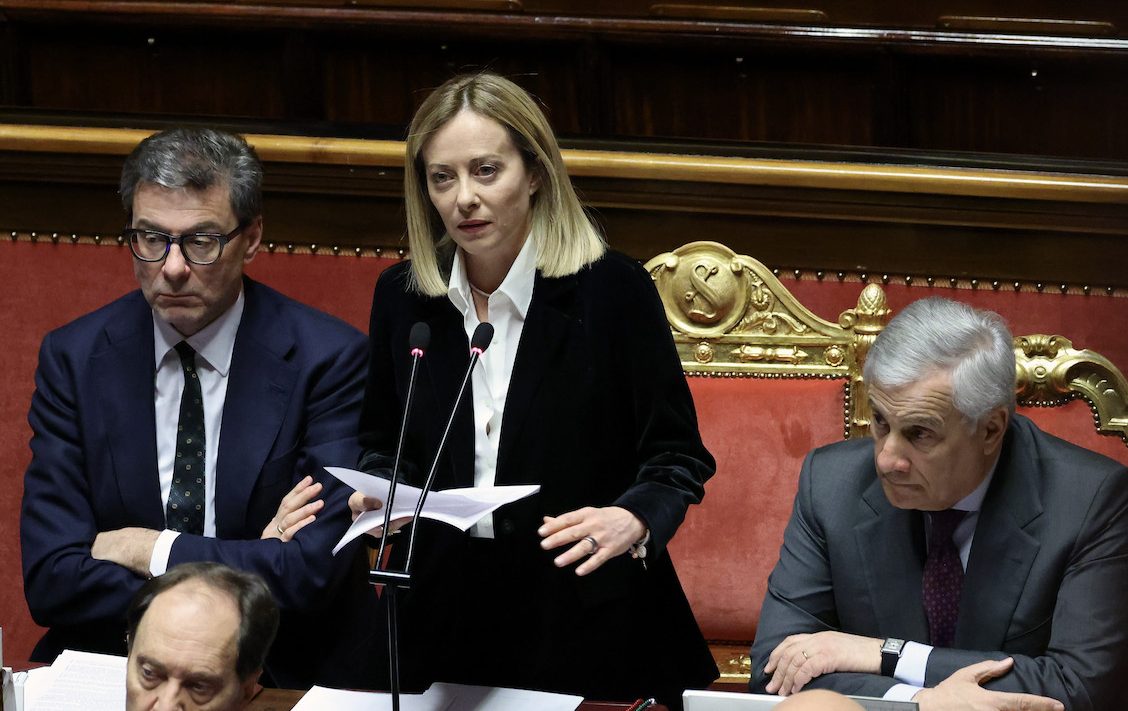
As Italy prepares its 2027 budget, Prime Minister Giorgia Meloni’s government is considering a range of specific measures to generate additional revenue from gambling licences.
The Ministry of Economy and Finance (MEF) is examining temporary measures that could generate between €400m ($467m) and €500m ($584m) in revenue from Italy’s regulated gambling market. The proposals have not yet been included in the draft Budget Law and may be amended.
Most of the additional revenue could come from extending Italy’s land-based gambling licences for three years. The current licences are due to expire at the end of 2026.
MEF is considering temporarily extending the land-based licences until the end of 2029. This would allow the government to continue collecting licensing fees while working on the long-delayed reform of Italy’s land-based gambling network.
In August, Meloni instructed MEF to end negotiations with the Conference of Regions and Autonomous Provinces over the final terms of the land-based gambling market reform.
The decision brought nearly three years of negotiations to an end and removed the reform from the government’s legislative agenda for 2027. According to media reports, abandoning the planned tenders would cost the state approximately €1.5bn ($1.76bn) in expected revenue.
The mandate provided for under Italy’s tax reform law subsequently expired on 29 August. However, national and regional authorities failed to reach a political agreement on the future location of betting shops, gaming halls and slot machines.
A temporary extension of the licences until the end of 2029 could generate between €200m ($234m) and €250m ($293m) in annual state revenue over the three-year period.
Under the current system, concessionaires pay €120 ($140) annually for each slot machine offering cash prizes and €4,000 ($4,676) for each video lottery terminal. Betting fees stand at €9,500 ($11,106) per agency and €5,700 ($6,663) per betting shop, while bingo operators pay €2,800 ($3,273) per hall each month.
Beyond maintaining state revenues, the licence extension would allow the government to test new requirements for slot machines, resume discussions with local authorities and prepare the tenders needed to establish a long-term regulatory framework for the land-based gambling market.
MEF prepares scratch-card tender
The Budget Law could also establish the terms for Italy’s next scratch-card concession tender. The segment is currently operated by Brightstar Lottery under a licence that expires on 30 September 2028.
According to reports, MEF is considering a starting tender price of around €1bn ($1.17bn). The existing single-concessionaire model in Italy is expected to remain in place.
The government has been encouraged by the results of the recent Lotto concession tender, which generated more than €2.2bn ($2.57bn) in upfront state revenue. Scratch cards also represent a valuable asset, with the concessionaire’s 6% commission on annual sales of around €8bn ($9.35bn) generating nearly €500m ($584m) per year.
However, the tender would not provide an immediate boost to the 2027 budget. Given the time required to prepare and award the concession, the Treasury is unlikely to receive the first two payments before 2028.
Other proposals reportedly under consideration include introducing a digital Lotto receipt, which could generate around €15m ($17.5m), as well as adding an extra Lotto and SuperEnalotto draw. This is estimated to generate approximately €50m ($58.4m) in additional annual state revenue.
All of these options remain provisional and could be amended or withdrawn as Italy prepares its 2027 Budget Law. The government is expected to present the draft Budget Law in October 2026.
Meloni remains accountable for the concession situation
The failure to renegotiate Italy’s land-based concessions has caused frustration among gambling licence holders, who had expected the government to agree on terms for a new generation of long-term licences.
Lottomatica CEO Guglielmo Angelozzi previously told investors that the prolonged negotiations had affected the company’s long-term financial planning. It remains unclear whether operators will support another three-year licence extension instead of the permanent solution they had anticipated.
The Meloni government has therefore only partially fulfilled its pledge to reorganise Italy’s gambling market and make it a more efficient and stable source of tax revenue. While the authorities completed the online gambling reform by introducing a new licensing regime, they failed to resolve the more complex issues surrounding the land-based sector.
The government is unlikely to revive the broader land-based market reform in 2027, leaving MEF to continue working on another temporary licence extension. Operators must now decide whether to extend their licences for another three years while continuing to operate under Italy’s fragmented regional and municipal rules.
Don’t forget to subscribe to our Telegram channel!