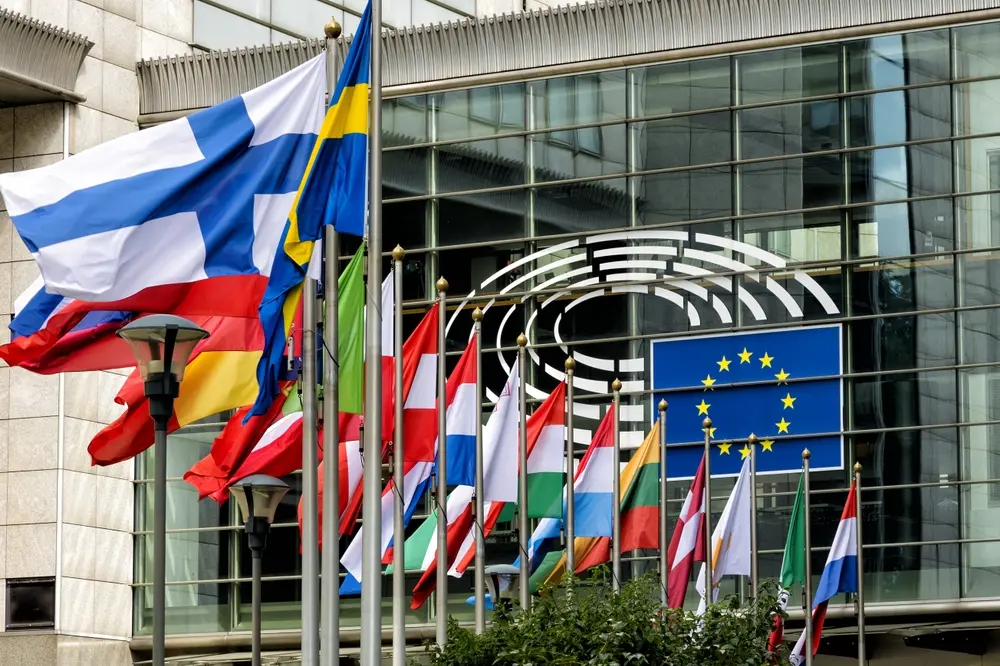
The responsibility of major technology platforms for monitoring advertising content has become the subject of a dedicated study commissioned by the European Commission (EC).
Particular attention is being paid to how effectively leading digital platforms, including Meta (Facebook and Instagram), Google and Apple, verify advertisers and prevent fraudulent advertising from appearing on their services. The study was commissioned by the EC as part of its supervisory activities.
Online gambling has been included among six advertising categories most vulnerable to fraudulent activity online. Alongside gambling, the list covers financial services, investment offers, dating services, e-commerce, and health-related products and services.
In particular, researchers are examining the advertiser verification procedures used by major platforms, as well as the measures they have introduced to address vulnerabilities that allow fraudsters to bypass existing control mechanisms.
The research is being conducted by Open Evidence and Spark Legal. It aims to identify weaknesses in the digital media environment and support the further development of the European Union’s Digital Services Act (DSA).
According to the researchers, the collected evidence “allows an analysis of how fraudulent schemes spread across different platforms, their impact on users and society, and the tools available to counter them”.
At the same time, the study “does not assess the extent to which platforms comply with the requirements of the DSA”.
The EU Digital Services Act (DSA) became fully applicable in February 2024. The legislation is designed to ensure the proper functioning of the internal market for intermediary services through a harmonised set of rules aimed at creating a safe, predictable and trusted digital environment.
Under the Digital Services Act (DSA), major technology platforms must meet a number of key requirements. These include protecting users from illegal and harmful content, introducing enhanced safeguards for minors and vulnerable groups, and ensuring users have control over the use of their personal data.
Weaknesses in Gambling Advertising Oversight
One of the key issues identified in the online gambling sector was the lack of effective advertiser verification mechanisms. This allowed operators to run advertising campaigns in countries where they did not hold the necessary licences.
“Advertising systems allow unlicensed operators to attract users in markets where they do not hold the relevant authorisations. In addition, fake apps are making their way into legitimate app stores.”
The researchers identified systemic weaknesses in the operations of major digital platforms. In particular, technology companies rely too heavily on “questionable declarations” from advertisers instead of conducting proper verification. Experts interviewed for the study believe that verification procedures should be strengthened in regulated industries.
Another obstacle to implementing the DSA is the absence of harmonised gambling regulations across Europe. The European Commission confirms that there is no EU-wide sector-specific legislation governing gambling, meaning each Member State independently determines how its national market is regulated, in accordance with EU law.
Consequently, licence checks must take into account the specific country targeted by an advertising campaign. Verifying a company’s identity and confirming that it holds a gambling licence in one country does not automatically entitle an operator to advertise its services across all European markets.
Google said it had addressed vulnerabilities in its advertiser verification system by introducing new mandatory certification requirements for advertising accounts promoting gambling. Since 14 September, operators have been required to obtain separate authorisations for each country in which they intend to target audiences with their advertising.
Fraudulent Advertising as a Source of Risk
Fake online casinos and betting platforms pose a separate threat by persuading users to deposit money before subsequently preventing them from making withdrawals.
According to the study, fraudsters attract customers by promising guaranteed returns and foolproof betting strategies. However, after depositing funds, users may encounter manipulated outcomes, frozen accounts or refused payouts.
Citing Debunk.org, the report states that advertising featured in 99% of the gambling scam cases reviewed. However, this does not mean that 99% of all gambling advertising is fraudulent. Rather, the figure reflects the proportion of reviewed scam cases in which advertising tools were used to promote such schemes.
Another aspect of the problem concerns the distribution of mobile applications. The report cites Trend Micro research identifying fake apps on Apple App Store and Google Play. These apps conceal their gambling-related functions during the review process and activate them only after receiving approval from the stores.
This suggests that initial app screening does not always guarantee safety, as an application’s behaviour can change once it becomes available to a wider audience.
The broader study also examines advertising mechanisms, recommendation systems, monetisation, messaging and the use of deceptive identities.
Proposed measures to address the identified weaknesses include stricter verification of businesses and advertisers, automated detection tools supported by human review, improved reporting mechanisms and closer cooperation between digital platforms and external organisations.
VNLOK Seeks Stronger Controls on Gambling Advertising
The study’s findings come amid growing criticism from Dutch regulators and licensed operators, who continue to push for a solution to the spread of illegal gambling advertising on social media.
In May, the Dutch gambling regulator, Kansspelautoriteit (KSA), reported that it had submitted more than 4,600 reports of illegal advertising to Meta during the previous month. The regulator noted that unlicensed operators were using recognisable brands and images of well-known Dutch athletes to make their advertising offers appear more trustworthy.
According to a subsequent response from the Dutch government, the number of such reports exceeded 26,000 in May. Authorities acknowledged that, given the scale of the problem and the short lifespan of the adverts, an approach based on identifying and removing individual posts could not deliver a lasting solution.
Dutch trade association VNLOK called for mandatory advance verification of licences held by advertisers promoting gambling. It also urged platforms to strengthen measures to detect advertising cloaking and the redirection of users through messaging services.
In June, the association announced plans to initiate legal proceedings against Meta and file a complaint with the European Commission.
Speaking later at the Gaming In Spain conference in Madrid, VNLOK Chairman Björn Fuchs said the organisation had evidence of “failures at Meta”. As one example, he cited data indicating that “97% of all advertisements identified were placed by unlicensed operators”.
VNLOK Chairman Björn Fuchs stated in an interview: “This study clearly demonstrates the scale of the challenges posed by fraud and scams on the largest online platforms and search engines.
“These findings are directly linked to our legal case against Meta and the company’s responsibilities under the Digital Services Act (DSA).
“These technology giants combine extensive reach, artificial intelligence and user data, creating an environment that is systematically being exploited. Stronger verification and filtering mechanisms are therefore needed.”
Don’t forget to subscribe to our Telegram channel!