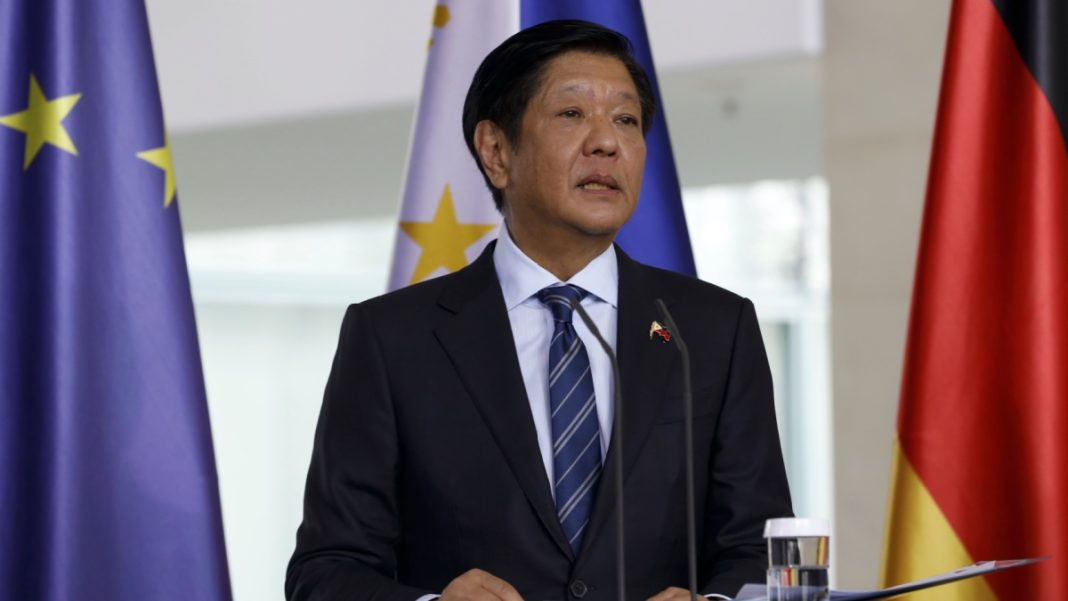
The Philippines’ President Ferdinand Marcos Jr. has not ruled out the possibility of tax increases and tighter regulation on the gaming sector, fueling further uncertainty in an already volatile industry.
Responding to reports that the Department of Finance may propose a tax hike, President Marcos stated that he would not oppose increasing the financial burden on online gaming operators.
Currently, operators licensed by the Philippine Amusement and Gaming Corporation (PAGCOR) are required to pay a 5% franchise tax on their gross gaming revenues.
At a press briefing, Claire Castro, the President’s Press Officer, remarked: “The President is aware of what could happen to those addicted to gambling, and he will not oppose it as long as there is sufficient study regarding the tax that may be imposed.”
She also confirmed that the government plans to intensify its crackdown on unlicensed operators operating in the Philippines.
These developments come amid rising political pressure to reform or ban online gambling altogether.
Senator Juan Miguel Zubiri introduced the “Anti-Online Gambling Act of 2025”, which aims to implement a total ban on online gambling.
Zubiri referred to gambling addiction as a growing “silent epidemic”, stating: “For as long as gambling is within reach by almost anyone online, this is a social cancer that will continue to fester.”
Earlier that same week, Senator Sherwin Gatchalian proposed a bill featuring several tough restrictions, including:
- A ban on e-wallets for funding online betting
- A minimum age of 21 for players
- A minimum deposit requirement of PHP 10,000 (approx. £129) to deter low-income participation
Additionally, Akbayan party representatives – Chel Diokno, Perci Cendaña, and Dadah Ismulla – filed House Bill 1351, proposing stricter age verification protocols, advertising and promotion limits and national self-exclusion registry for problem gamblers.
The bill’s authors warned: “The absence of regulatory controls has led to a rise of gambling-related problems, including financial meltdowns, family breakdowns, gambling addiction, depression, and other mental health issues.”
“The Kontra e-Sugal Act of 2025 seeks to establish a framework to regulate online gambling in the Philippines, safeguard public welfare, protect vulnerable groups, and ensure responsible gambling practices.”
Castro did not confirm whether President Marcos would address the Anti-Online Gambling Act 2025 in his State of the Nation Address, but said that the proposals would be brought to his attention.
In response to these proposed changes, investor confidence in the gaming sector plummeted.
Shares in DigiPlus Interactive Corp, the Philippines’ largest online gaming operator, fell by up to 30%, though they recovered slightly later. Bloomberry Resorts Corp, an integrated casino-resort operator, saw its shares drop by 12% the same day.
Despite the turmoil, DigiPlus announced a share buyback program, indicating confidence in the market’s long-term prospects.
Chairman Eusebio Tanco stated: “By strategically deploying our capital through this buyback, we are sending a clear signal that DigiPlus is committed to delivering sustainable returns for shareholders while remaining well-positioned to pursue expansion and innovation.”
For now, Philippine gaming operators face a tense and uncertain wait, as lawmakers deliberate over sweeping proposals that could transform the industry’s future.
Don’t forget to subscribe to our Telegram channel!