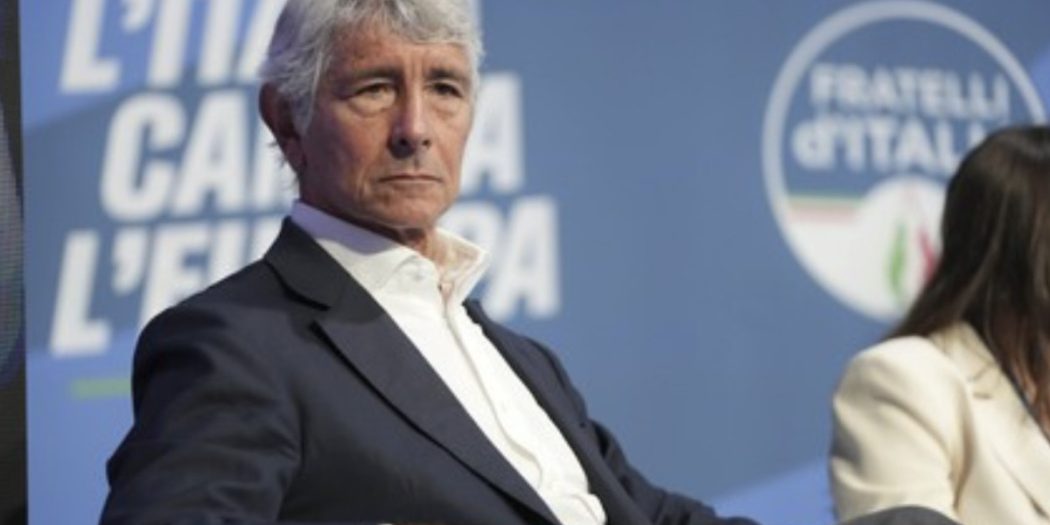
Italy’s Minister for Sport, Andrea Abodi, has formally presented the new Sports Decree, a policy package designed to modernise Italian sport, unlock stalled infrastructure, and revive lost commercial opportunities, including the potential return of gambling sponsorships.
Backed by the Council of Ministers, the decree lands with urgency as PM Giorgia Meloni seeks to initiate plans to modernise Italy’s sports infrastructure and investment in time for the hosting of the Milan Cortina 2026 Winter Olympic Games.
“The Sports Decree has a strong economic mandate,” Abodi told press this week, underscoring the government’s aim to balance social safeguards with the financial sustainability of elite sport. “It must deliver long-term investment while addressing deep-rooted vulnerabilities across our system.”
Central to upcoming reforms is the repeal of Italy’s Dignity Decree, the 2018 law passed by the short-lived Lega-Star coalition that imposed a blanket ban on gambling advertising and sports sponsorships. After six years in effect, all Italian parties are adamant that the Dignity Decree has failed in its objectives and caused significant harm to sports funding.
Abodi confirmed that formal talks will begin in the autumn with stakeholders across Serie A, broadcasters, and Italy’s sports federations. A revised sponsorship regime is now on the table, which would allow licensed gambling operators to return to Italian football under strict new conditions.
Reinitiating gambling sponsorships, Abodi has presented plans to impose a 1% levy on all sponsorship revenues, earmarked for stadium redevelopment (much desired by the government), investment in women’s and grassroots sport, and funding for addiction and player protection programmes.
Insiders suggest the repeal could unlock €130–€150m in annual revenue for Italy’s top leagues which Serie A clubs say has been denied since 2019. Of significance, Italy’s Judiciary backs the measure as it seeks to end a backlog of legal disputes that the Dignity Decree bore due to contested contracts by media and gambling operators.
More contentious, however, are proposals to ease restrictions on TV and digital gambling ads, which were also swept up in the Dignity Decree. While sponsorships enjoy broad support, advertising reform is expected to face stronger resistance from public health groups – in which Abodi warns of strict guidelines on media coverage.
A formal legislative text on gambling advertising is expected to reach Parliament by September 2025, alongside broader updates tied to Italy’s new online betting licence regime.
From the government’s perspective, the stakes go beyond sport to support the relaunch of Italy’s new online gambling sector under a new €7m licensing regime.
Online gambling is projected to generate over €7bn in gross revenues this year. Ministers argue that easing advertising restrictions will improve market channelisation and reduce black market encroachment, a growing concern for the state and its tax base.
Abodi insists that any reform will be tightly governed: “This is a topic that deserves in-depth ideological analysis. There is great concern about how to effectively stem the social scourge of gambling addiction. But I’m convinced that we can find a solution that aligns economic reality with social responsibility.”
Don’t forget to subscribe to our Telegram channel!