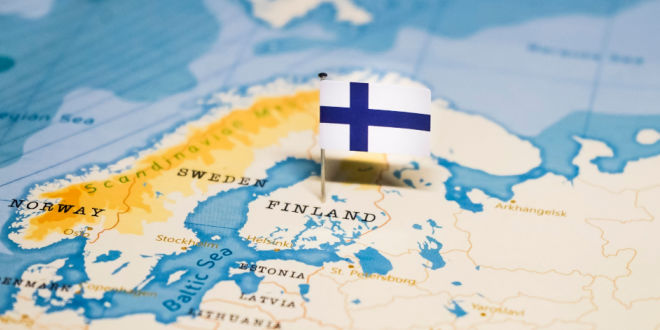
The Finnish National Sports Council has published a report examining the consequences for sports integrity following the opening of the betting market. The council, a government advisory body on sports matters, forecasts a significant increase in cases of match-fixing.
The main reason is the expected weakening of oversight capabilities due to the transition from the current monopoly on legal sports betting held by Veikkaus Oy to a multi-licence system.
Although the report notes that Finland’s sports integrity protection framework is generally satisfactory, it has already recorded a rise in match-fixing threats. For example, the number of notifications received by the Finnish Centre for Integrity in Sports (FINCS) has been increasing.
Specifically, the number of reports of competition manipulation received by SUEX rose from fewer than 20 to more than 60 in 2023, and in 2024 reached 71. After 2027, with the arrival of a large number of new betting operators, a further increase is expected.
According to authorities, football and ice hockey are the sports most at risk – the two most popular in the country in terms of both viewership and participation. Along with horse racing, they are expected to attract the most betting after the market launch.
The report notes that while Finland’s legal framework for protecting sports integrity is adequate, it requires further development. In particular, it will need to be expanded to include betting regulation.
Since betting has been excluded from Veikkaus’ monopoly for several decades, there has been little need for Finnish sports law to take it into account. For the most part, legislation has focused on anti-doping.
However, the growing activity of offshore operators – the very reason for the launch of a regulated market – has underscored the need for change. The report proposes introducing the concept of “sports fraud” into Finnish legislation.
In addition to legal changes, the Council recommends that the government develop a long-term plan for funding ethical issues in sport. This is due to the fact that Finland’s resources in this area have long been concentrated almost exclusively on anti-doping activities. Now, significant reallocation is needed to address risks associated with betting.
Other recommendations include clarifying the legal status of FINCS as a regulatory authority in the field of sports integrity, developing a systemic plan for FINCS and the Ministry of Education and Culture, and creating a national model for cooperation between the government and regulators to combat sports manipulation.
The report also analyzes examples from other markets, both long-regulated and those that have recently undergone similar reforms.
Of particular interest is Sweden, where the transition from a state monopoly under Svenska Spel to a multi-licence system took place in 2019. This was accompanied by a number of restrictions, particularly on online casinos and betting.
A key element of Swedish regulation was the ban on betting on youth matches – a rule common across many jurisdictions. In Germany, some companies have also stopped offering bets on amateur sports, though the German experience is not covered in the report.
Finland’s interest in Sweden’s example is explained not only by the similarity of the transitions (from monopoly to multi-licence), but also by broader shared challenges.
This was the main driver behind Finland’s decision to abandon the monopoly – a decision supported even by Veikkaus, despite the company losing its exclusive rights to sports betting. However, Veikkaus will retain its monopoly over land-based casinos and the lottery.
In addition to Sweden, the report highlights examples from Australia and the UK. Sport Integrity Australia (SIA) is cited as a successful example of an organization performing functions similar to FINCS, but with stronger legislative support.
Overall, the report demonstrates one key point: Finland’s transition to a new regulatory system will not be easy. Many factors must be considered – from player protection to sports integrity, from the extent of advertising restrictions to the ways they may affect one another.
Don’t forget to subscribe to our Telegram channel!