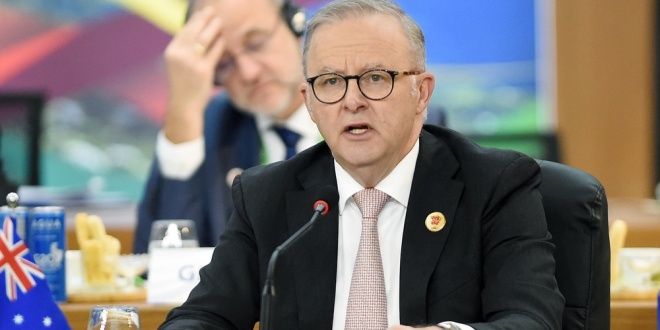
Australia’s government, led by the Labor Party, may abandon plans to introduce a nationwide ban on gambling advertising. This decision marks a departure from Prime Minister Anthony Albanese’s 2022 election pledge. At the time, Labor described the situation as an “epidemic of gambling advertising in Australian society.”
According to the Australian Financial Review (AFR), Albanese is likely planning to use the upcoming restrictions on social media for people under 16 as a reason to soften the proposed ban and reduce internal party tensions.
After winning the May 2025 election, the government approved a ban on social media use for those under 16. The decision has been criticized by the opposition but is broadly supported by parents. The restrictions will take effect in early 2026.
Labor appears to be moving away from the key recommendation of the 2023 Murphy Report – a three-year phase-out of gambling advertising – though the government will continue reviewing gambling reform.
Communications Minister Anika Wells, who took over the portfolio in May, will be responsible for developing federal advertising regulations. Wells is expected to begin new negotiations with broadcasters, sports organizations, and state regulators to create a revised national regulatory framework.
However, it is unlikely that either Wells or Albanese will support a complete ban on gambling advertising. Industry sources suggest the government may return to a “softened” restriction on gambling ads during live sports broadcasts.
Australian sporting leagues, bookmakers, and industry groups – including Responsible Wagering Australia (RWA) – have already expressed willingness to discuss alternative measures.
A study commissioned by RWA showed rapid growth in Australia’s illegal offshore gambling market, which has doubled since 2019 – from AUD 5.3 billion to AUD 10.9 billion. Around AUD 7 billion flows through licensed domestic operators, while the remainder goes to unregulated offshore sites that are expanding even faster.
The study also found that half of the players using offshore websites are registered in the government’s BetStop self-exclusion system, indicating that these foreign sites deliberately target vulnerable consumers banned from local platforms.
Wells and the Albanese government are under pressure to present a plan to combat the black-market industry. This is necessary amid record fines issued by ACMA and AUSTRAC over the past two years for advertising and compliance breaches.
Media networks and sports leagues continue to warn that a full gambling advertising ban would remove around AUD 300 million in annual revenue from broadcasters and sports organizations. NRL chairman Peter V’landys, a close ally of Albanese, remains one of the most vocal opponents of a full ban, calling earlier Labor proposals “nanny-state ideology.”
The government’s passive stance on gambling advertising has caused reputational damage for Labor, especially the prime minister. Australia still does not have a Federal Gambling Authority, even though the market is projected to reach USD 15.43 billion in 2025 and the country maintains the highest gambling participation rate in the world – 75% of Australian adults gamble.
Almost every week, new reports emerge of betting-related scandals in sports and increasing social harm from gambling addiction. However, this has not stopped sports clubs and celebrities from entering partnerships with bookmakers. For example, one of Australia’s greatest cricket players, Glenn McGrath, signed a deal with bet365. According to The Guardian, this forced him to leave his commentator role at ABC.
As a public broadcaster, ABC strictly prohibits its employees from entering commercial agreements with betting firms. This contrasts sharply with networks such as Nine, which heavily depend on gambling advertising revenue and have protested against plans to cut it.
Meanwhile, reformist and prohibitionist movements are gaining influence – particularly the Alliance for Gambling Reform (AGR). This year, it brought together 100 of Australia’s most prominent political and sporting figures to call for immediate restrictions and a complete blackout of gambling advertising.
AFR also reports that Minister Wells has acknowledged that the final decision rests with Albanese. Insiders believe he will not impose a complete ban on online gambling. An official announcement is expected early next year.
At the same time, Albanese will not be able to avoid criticism: he will face growing pressure to deliver real action. In a recent TV appearance, critics accused him of “speed-dating his replies” to questions about the country’s escalating gambling problems.
Don’t forget to subscribe to our Telegram channel!