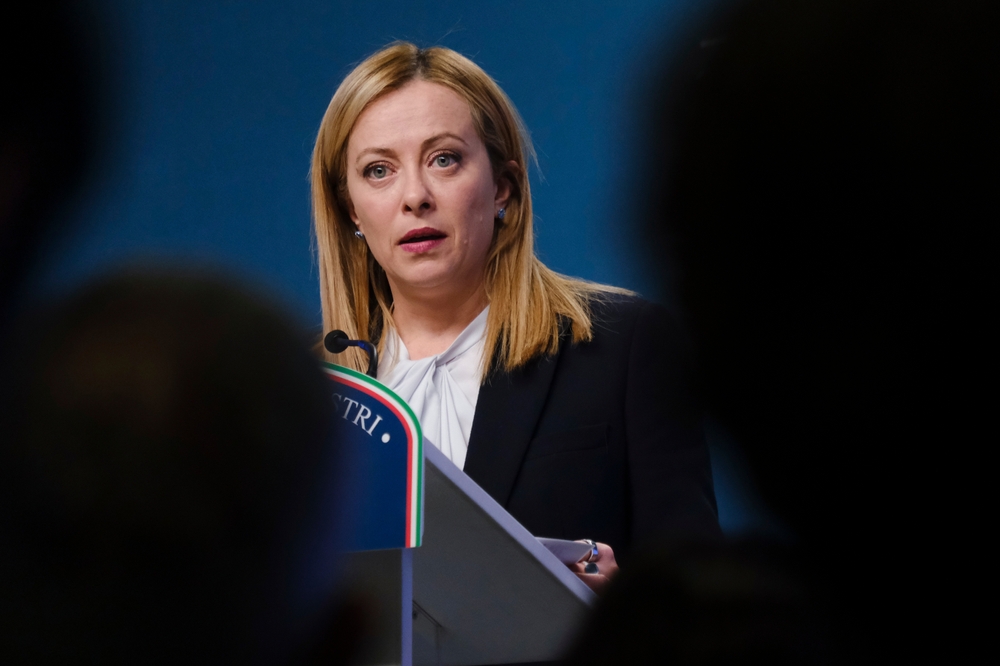
Giorgia Meloni, Prime Minister of Italy, has signed off the country’s Budget Law, setting her Brothers of Italy government’s fiscal objectives ahead of the 2027 general election.
Italy plans to use the gambling, finance and energy industries as cash generators to support huge spending plans and maintain the Italian economy’s sustainability against forthcoming global economic impacts.
The Council of Ministers signed off the draft Budget Law yesterday. The budget was first presented to the Council and to the European Commission by Giancarlo Giorgetti, Minister of Economy and Finance, on 15 October.
The Ministry of Economy and Finance (MEF) expects taxes on the gambling sector to amount to €700m (approximately $782m) in state revenue between 2026 and 2027. Previous expectations were as high as €1bn (approximately $1.12bn), or lower, in the range of €400m–€500m (approximately $447m–$559m).
Taxes on the three industries will supplement spending and tax cuts amounting to €26bn (approximately $29.1bn) for 2027 and €27bn (approximately $30.2bn) for 2028.
The tax expectations of the gambling industry will come as no surprise to the sector, with Meloni having previously stated that the government was considering it as an option to support its spending plans.
As stands, the Budget Law holds no tender for Gratta e Vinci (scratch cards), as the proposal remains under consideration by the Meloni government. Ministers are also reportedly weighing a paid extension of the existing concession, which expires in September 2028.
Any sign of stability for Italian betting?
The Italian budget comes during a transformational time for Italian gambling.
The online market is nearing completion of its first year under a new regulatory framework, following the introduction of a fresh licensing regime with an annual fee of €7m (approximately $7.8m) in November 2025.
A key change saw companies no longer able to operate multiple brands under one licence, instead needing to hold an individual licence for each brand.
Flutter Entertainment, for example, will need a licence for each of its four brands in Italy – Sisal, Snai, PokerStars and tombola. Betfair, meanwhile, is being closed down in the Italian market.
Italy’s retail gambling sector, meanwhile, is still awaiting regulatory settlements following a stalemate in negotiations between the Ministry of Economy and Finance (MEF) and the Conference of Regional Councils.
In August, following two years of negotiations, Meloni ordered the MEF to end discussions with the Conference to determine the new federal framework governing land-based gambling venues across Italy’s 20 autonomous regions and 110 municipal councils.
The decision saw the ADM ordered to apply a further licensing extension for Italian land-based gambling concessions, which will expire at the end of 2028.
Regardless, Italy’s betting industry remains vast, ranking among the five largest in Europe.
The Italian budget also shows that governments with different ideological persuasions are more than willing to use the sector as a source of state revenue. As mentioned above, Italy’s budget was approved shortly after the UK’s was announced.
The governments of Italy and the UK are ideologically far apart. Britain is governed by the traditionally left-leaning, social democratic Labour Party under Prime Minister Andy Burnham, while Meloni’s Brothers of Italy is a right-wing populist party.
Like Italy, the UK government is also planning to use gambling taxes to offset tax cuts in another sector, although not on the same scale.
Britain’s Chancellor of the Exchequer, John Healey, has increased the tax on retail gaming machines from 20% to 25%, using the additional revenue to fund a reduction in business rates for hospitality and leisure venues. The measure forms part of a wider effort by Burnham’s government to revitalise the UK’s long-struggling high streets.
Don’t forget to subscribe to our Telegram channel!