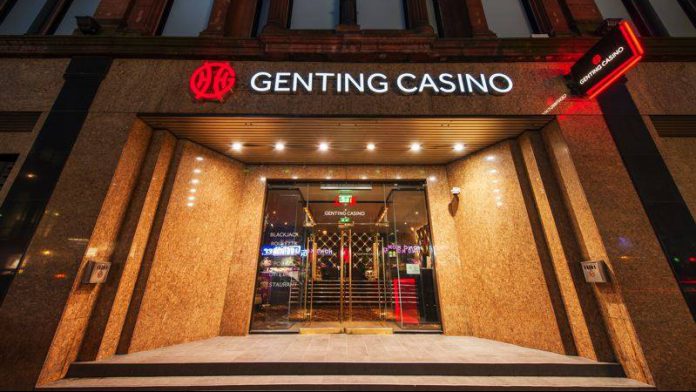
Lim Kok Tay has stepped down as the CEO of Genting Berhad, the holding company of land-based casino operator Genting Group. The move could signal a change in the company’s long-term strategy.
The leadership change at Genting Berhad marks a significant change in the corporate structure of one of Asia’s most influential gaming and hospitality conglomerates.
Genting Berhad is the parent company of Resorts World Las Vegas and the majority shareholder of Genting Malaysia and Genting Singapore. They oversee the major casino and resort operations, including Resorts World Genting in Malaysia and Resorts World Sentosa in Singapore.
Lim’s successor, Tan Kong Han, has been a key figure in Genting Berhad’s operations for nearly two decades, serving as president, chief operating officer (COO) and executive director.
Lim, meanwhile, will remain with the company as an executive director. As the son of Genting Group founder Lim Goh Tong, he has led the group since 2003, overseeing its expansion into new markets, including the US. His continued involvement means he will still have a role in shaping the company’s future, even as he steps away from day-to-day CEO duties.
Looking further ahead, the company’s leadership succession plan appears to include Lim Kok Tay’s son, Lim Keong Hui, who was appointed deputy CEO of Genting Berhad in 2019.
Given the group’s history of family leadership, it is likely that he will eventually take on a more significant role within the organisation.
The leadership change comes at a challenging financial time for Genting Berhad, particularly in its US operations.
The company has recently faced significant scrutiny over Resorts World Las Vegas, where it was implicated in allegations of money laundering and illegal betting. The investigation puts additional pressure on the company’s management at a time when it is looking to expand into new markets.
Resorts World Las Vegas is struggling to generate consistent profitability, with revenue for the fourth quarter of 2024 coming in at $190 million, up from the previous quarter but well below the $241 million reported in the same period a year earlier.
The company’s EBITDA for the fourth quarter was barely positive, coming in at just over $1 million, down from $58.2 million reported in the fourth quarter of 2023.
The disappointing results suggest the company needs to sharpen its strategy in the U.S., possibly focusing on cost-cutting measures and revenue optimization.
Global Growth on the Horizon
One of Genting Berhad’s key growth strategies is to secure new gambling licenses in emerging markets. In particular, the company is targeting a license in Thailand, where a new casino law is being worked on.
Interestingly, both Genting Malaysia and Genting Singapore, subsidiaries of the same parent company, have expressed interest in bidding separately for the Thai casino license.
This creates a unique situation where the two Genting-owned companies could find themselves in direct competition to enter the Thai market.
Maybank Investment Bank analyst Samuel Ying Shao Yan noted in a recent report that Genting Malaysia, which operates three casinos in New York in addition to its flagship Malaysian resort, could submit a separate bid from Genting Singapore. The domestic competition highlights the importance of the Thai gaming market to Genting Berhad’s long-term expansion strategy.
The Thai market represents a potentially lucrative opportunity given its proximity to key Asian tourist destinations and the growing demand for upscale integrated resorts in the region.
Don’t forget to subscribe to our Telegram channel!