European authorities are planning to tighten the screws on betting activity on international sport following the 2026 FIFA World Cup.
The four-week tournament, which concluded on 19 July with a final in which Spain defeated Argentina 1-0 to win the World Cup for the second time in history, once again became a key driver of audience engagement for the international betting industry.
Ahead of kickoff, however, Alain Berset, Secretary General of the Council of Europe, made his concerns clear about “betting on every pass, every card, every corner” during the tournament.
“Betting has moved from the result of a match to moments a single player can produce without changing the score,” said Berset.
Betting, predictions and the World Cup
Berset also expressed alarm at “political influence” over the tournament – alluding to US President Donald Trump’s call to FIFA President Gianni Infantino about Folarin Balogun’s red card, which would have excluded him from the host side’s game against Belgium, which they ultimately lost 4-1.
Putting politics aside, however, the betting industry should pay attention to Berset.
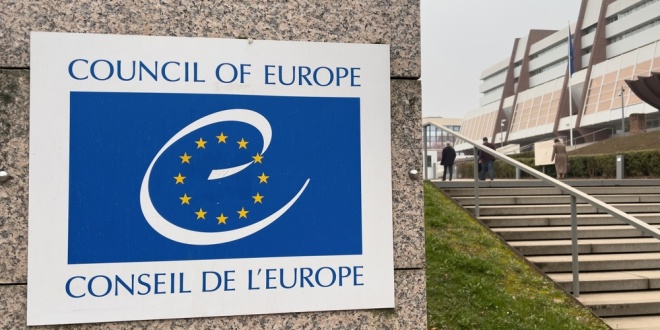
The Council of Europe, an international body separate from the European Union tasked with upholding European rule of law, has intervened on betting before, and Berset’s viewpoint of the industry seems critical, to say the least.
“It is an open door to fraud,” he remarked of the betting industry. “And this World Cup has opened the door wider. For the first time, FIFA welcomed a prediction market as an official partner, inside the stadiums themselves.”
Back in May, FIFA partnered with ADI Predictstreet, a Gibraltar-licensed predictions platform built on the ADI Chain, the blockchain solution developed by the UAE-based ADI Foundation.
As a partner, ADI Predictstreet branding was seen across stadiums during the World Cup. When the firm partnered with global predictions giant Kalshi, a company valued at $22bn, Kalshi branding was subsequently seen at stadiums.
A number of people on social media have expressed alarm at how predictions advertise themselves, particularly Polymarket and its partnerships with influencers.
This has added another layer to already intense debates about gambling’s visibility in key European markets like the UK, Italy, Spain, Germany and the Netherlands.
The visibility of predictions in Europe is only set to grow further, as Gibraltar positions itself as a leading hub for the emerging sector.
The British Overseas Territory has licensed two companies, the abovementioned ADI Predictstreet and more recently WagerWire, and last week became the first jurisdiction to launch a dedicated regulatory framework solely for predictions.
This sector comes with a lot of concerns about integrity, however, chiefly relating to the political markets it offers. These concerns have clearly been taken on board by the Council of Europe when it comes to sport too, however.
Berset is calling on FIFA to start a “third half” and “to build the integrity framework of the 2030 World Cup before it is played”.
By far the most notable action the Council of Europe has taken on sports betting was the adoption in 2019 of the Convention on the Manipulation of Sports Competitions – best known as the Macolin Convention.
The convention has since been adopted by 43 states and is widely considered one of the most watertight regulatory frameworks for preventing match manipulation and protecting sporting integrity.
With the final whistle of the 2026 World Cup having sounded last night, Berset now wants to see the Council of Europe and others “open the third half and the urgent work of strengthening the integrity of sport”.
Don’t forget to subscribe to our Telegram channel!