A panel of community stakeholders declared full support for Croatia’s plans to overhaul its gambling laws and create a new regulatory regime to govern and tax gambling.
State Secretary Tereza Rogić Lugarić hosted a press conference with representatives of Croatian business, media, education and healthcare to encourage a wider participation in the government’s forthcoming overhaul gambling laws.
Of significance, hosted under the banner of “Fun in moderation – what you need to know about gambling” – stakeholders confirmed that they would cooperate in establishing a “National Strategy for the Prevention of Gambling Addiction to 2030.”
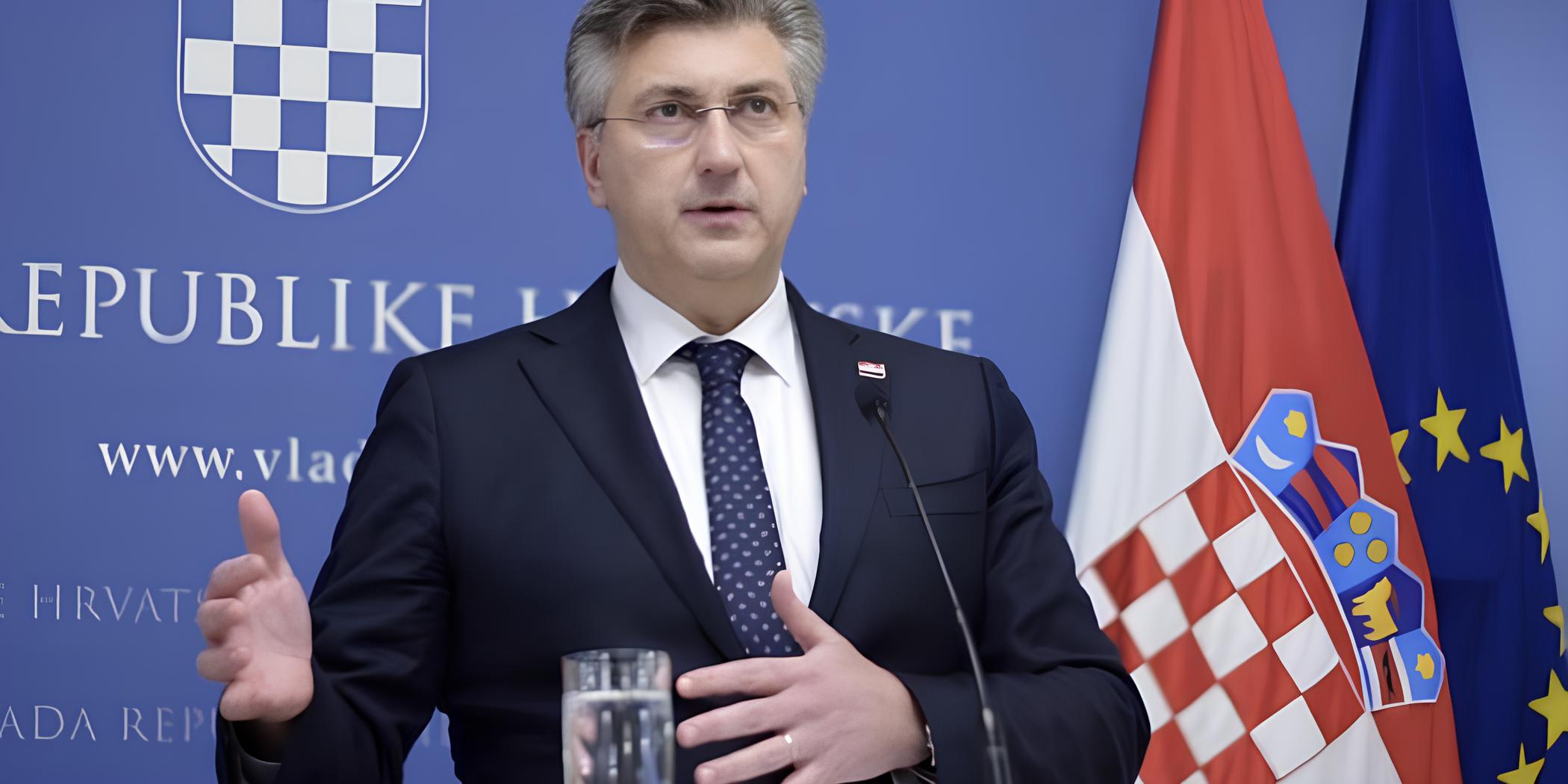
The gathering marked the launch of a far-reaching legislative effort, authorised by the Parliament in March. A mandate viewed as an executive intervention by Prime Minister Andrej Plenković. now in his third term, to make gambling reform a centrepiece of the HDZ government’s agenda.
Following wide-spread criticism, many view this as the HDZ government’s admission of its systemic failure to protect 40,000 Croats from gambling-related disorders, a figure that rises alarmingly when one considers the younger population.
Research from the Croatian Institute of Public Health reveals that 73% of high school students have gambled at least once, with 13% already exhibiting signs of harmful behaviour.
Plenković’s government aims to arrest this trend with a strategy that is both legislative and cultural. The new gambling law, to be fully enforced by early 2026, introduces mandatory player identification for all gambling participation – whether online or in-person – and establishes a national self-exclusion register to protect vulnerable individuals.
Venues such as cafes and restaurants will be prohibited from hosting self-service betting terminals. Municipalities will be ordered to review the location of gambling establishments, which must now maintain minimum distances from schools and religious buildings. The government estimates that 50% to 60% of betting shops may be forced to relocate or shut down altogether.
Gambling advertising will be banned from television, radio and online platforms between 6am and 11pm. Promotions featuring celebrities, athletes, or influencers will be outlawed entirely. Print and outdoor advertising will likewise be curtailed. Digital operators will be held accountable for preventing underage exposure to gambling content.
State Secretary Rogić Lugarić was forthright in her rationale: “Technological progress has made gambling just too accessible. These measures are designed to reassert the boundaries of conduct and responsibility of gambling.”
However, yesterday stakeholders announced that gambling reforms would not simply be contained to policies. Cooperation is needed to launch a new National Strategy for the Prevention of Gambling Addiction 2030.
A five-year mandate that for the first time treats gambling harm as a behavioural health issue with social, economic and psychological dimensions. The strategy, developed in coordination with the Ministry of Health, the Croatian Institute of Public Health, and academic experts, outlines a comprehensive public health response.
It prioritises mental health support, early intervention in schools, media literacy, and international cooperation. “This is not a public relations exercise,” said Marko Babić of Hrvatska Lutrija.
“We are part of a European project, alongside the Council of Europe and nine member states, to study youth mental health and reduce high-risk behaviours such as gambling.”
The conversation also touched on the wider implications of the digital economy. Professor Predrag Pale, speaking on behalf of the education sector, warned of the collapsing attention spans among youth – a trend he believes makes them more susceptible to rapid-reward mechanisms like betting and gaming.
“Children today have access to everything, but are engaged by nothing,” he noted. “We are still teaching with 20th-century methods, while they are living in a hyper-connected 21st-century reality.”
The reforms coincide with the introduction of a progressive new tax regime. The current flat tax model, in place since 2010, will be replaced by a tiered system on player winnings, ranging from 10% on sums under €1,500 to 30% on those above €70,000. Licensing fees will rise sharply: land-based casinos will pay €600,000 annually (up from €400,000), while online operators and betting shops will see similar increases.
The state anticipates an additional €50–70m in annual revenue, with at least 11% ring-fenced for addiction treatment and prevention. The remainder will fund education, civil society initiatives, and healthcare.
Not everyone is convinced by the mandate. The Croatian Association of Gambling Operators (HUBPS) and the European trade group EUROMAT have warned that the reforms could jeopardise as many as 15,000 jobs and disproportionately affect small operators.
Ozren Kronja, representing Croatian digital publishers, voiced concern that the government’s heavy-handed approach might backfire.
“While Croatian media are being strangled with restrictions, Big Tech platforms are left to self-regulate,” he said. “The unintended consequence may be to push gambling adverts further into unlicensed, untraceable channels. We’ve seen this in Italy, where illegal digital casinos proliferated despite stringent laws.”
Nonetheless, the government appears resolute. A new regulatory authority will be established to monitor compliance, oversee licensing, and enforce penalties. Operators that fall short of new standards risk fines and the revocation of their permits.
The Ministry of Finance has already trialled automated keyword-based detection to block access to illegal gambling sites. Now, it intends to go further by compelling payment providers to halt transactions to unauthorised operators.
The HDZ government has committed to a “calculated bet” on restructuring Croatia’s gambling sector, recognising the high stakes involved in achieving a balanced regulatory framework that serves all stakeholders.
Progress in Croatia is widely seen as a potential inflection point for gambling reform across the Balkans, where countries like Serbia, Montenegro, and Bosnia face similar failures and liabilities.
Don’t forget to subscribe to our Telegram channel!